The Hidden Work That Happens Between Tasks
Last Updated
Three weeks after sending a referral, someone in the clinic asks a simple question:
Has anything happened with it?
Nobody is sure.
The referral was sent. There is a fax confirmation. There is no indication that anything went wrong. Yet there is also no clear answer about whether it was received, triaged, rejected, or scheduled.
The work exists in an uncomfortable state between active and complete. Everyone assumes it is moving forward because there is no evidence that it is not.
The problem is not that someone forgot to send it.
The problem is that once the referral left the clinic, the work entered a space that nobody was actively watching.
Most continuity failures in primary care do not happen at the moment work is performed. They happen afterward.
The work is technically in motion. That is precisely why it becomes difficult to see.
Where Patient Work Actually Stalls
When clinics review their most frustrating follow-up issues, the root cause is often surprisingly difficult to identify.
The referral was sent, the result was reviewed, the consult note was received, and the task was completed. Every individual action occurred exactly as intended.
Yet somehow the patient's care still stalled.
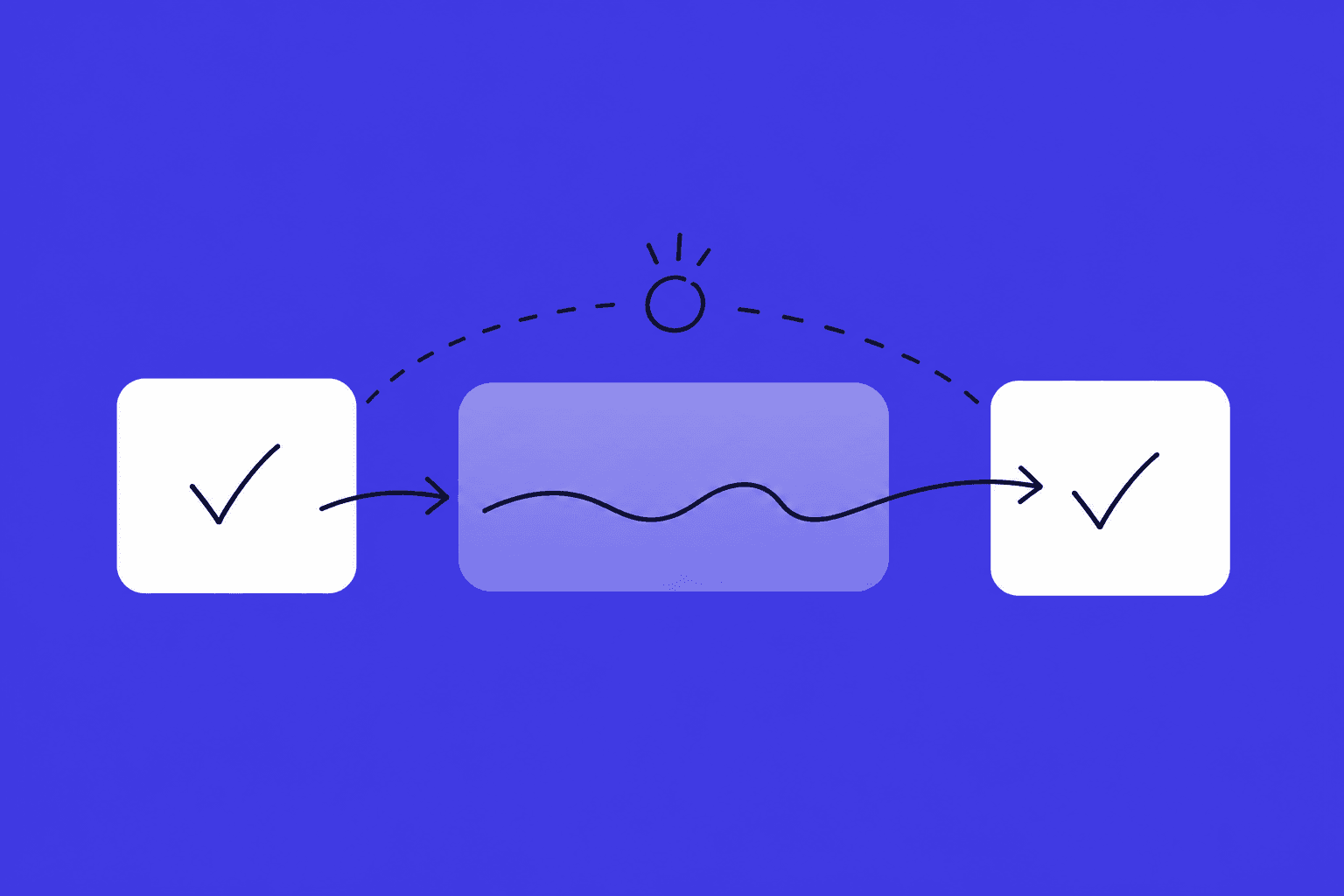
What often gets overlooked is that patient care is not a series of isolated actions. It is a chain of actions connected by waiting periods. The referral must be received after it is sent. The patient must be contacted after the result is reviewed. A plan must be assigned after the consult arrives.
Those intervals are where continuity quietly breaks down.
Not because anyone made a mistake.
Because nobody owns the space between one step and the next.
The Difference Between Tracking Actions and Tracking Intervals
Clinical systems are generally very good at recording what people do.
They document that a referral was created. They log when a result was reviewed. They record when a note was signed.
What they are often less equipped to answer is a much simpler operational question:
What is supposed to happen next?
A fax confirmation is a good example.
Most clinics have experienced the small moment of reassurance that comes from seeing a successful transmission notice. The referral has left the building. There is proof that it was sent.
But a fax confirmation only confirms transmission. It says nothing about whether anyone on the receiving end reviewed it, triaged it, or determined that additional information was needed.
The action is visible.
The interval afterward is not.
The same pattern appears throughout primary care.
A physician reviews an abnormal result and creates a task to contact the patient. The review is documented. The task exists. But if the patient cannot be reached after two calls, who is responsible for tracking that unresolved status a week later?
A consult arrives recommending medication changes. The document is received and filed. But who is responsible for ensuring those recommendations are discussed with the patient if the next appointment is still months away?
The work has not stopped.
Yet it can become surprisingly difficult to see.
Why Waiting Work Becomes Invisible
Most clinic processes are organized around actions because actions are easy to measure.
A referral can be sent.
A task can be assigned.
A result can be reviewed.
Waiting cannot.
The challenge is that patient care spends much of its life in waiting states.
A referral may be waiting for a specialist office to acknowledge receipt. A patient may need to return a call before the next step can happen. Additional information may be outstanding, or a follow-up appointment may still be weeks away. In many cases, work is simply waiting for another team member to complete the next step in the process.
These periods can last days, weeks, or months. During that time, the work often exists in an ambiguous state. It is not complete, but it is no longer actively in front of anyone.
Operationally, this creates a blind spot.
The clinic can see the last completed action, but not necessarily whether the process is still progressing toward resolution.
The Cost of Unowned Intervals
This is why many follow-up problems feel so difficult to trace after the fact.
There is rarely a single failure point.
Instead, there is a sequence of reasonable assumptions.
Someone assumes the referral office will call when an appointment is booked. Someone else assumes the patient will respond to a message that was left last week. The next step may feel implicitly assigned, or it may seem obvious that another person is monitoring progress.
Individually, each assumption makes sense.
Collectively, they create a gap where responsibility becomes diffuse.
Work that is actively being managed usually moves forward. Work that has clearly failed usually gets attention.
The most vulnerable work sits in the middle.
Not finished.
Not forgotten.
Simply waiting.
What Better Follow-Through Requires
Improving continuity is often framed as a matter of making tasks easier or helping staff work faster.
But many of the breakdowns clinics experience have less to do with the actions themselves than with what happens afterward.
The operational challenge is maintaining visibility during the intervals.
Who is waiting on whom?
What is supposed to happen next?
How long has the work been sitting in its current state?
When should someone intervene?
These questions are not about documentation. They are about stewardship.
Reliable follow-through depends on systems that remain aware of patient work while it is in progress, not only when someone is actively touching it. That is one reason Aeon's approach focuses on helping clinics maintain visibility into unresolved patient work as it moves between steps, rather than simply recording that an action occurred.
Because continuity is rarely lost when a referral is sent.
It is lost in the three weeks afterward, when everyone assumes the process is still moving and nobody can actually see whether it is.
Patient care happens in the spaces between actions, too. Those intervals deserve just as much visibility as the moments we record.